Akrinor
Akrinor is a mix of two theophylline conjugates, cafedrine (norephedrine linked to theophylline) and theodrenaline (norepinephrine (noradrenaline) linked to theophylline), in a ratio of 20:1 (2 ml = 200 mg cafedrine + 10 mg theodrenaline).
It's both a direct and indirect sympathomimetic agent.
Norephedrine (also called phenylpropanolamine) primarily acts as a selective norepinephrine-releasing agent.https://en.wikipedia.org/wiki/Phenylpropanolamine#Pharmacodynamics
Norepinephrine (noradrenaline) is an alpha-1, alpha-2 and beta-1 agonist.https://en.wikipedia.org/wiki/Norepinephrine_(medication)#Pharmacology
Theophylline inhibits phosphodiesterase (PDE).https://en.wikipedia.org/wiki/Theophylline#Pharmacodynamics
Akrinor raises blood pressure primarily through positive inotropy and increased cardiac preload, stroke volume and cardiac output, with systemic vascular resistance (SVR) remaining largely unchanged. Bein et al.Cafedrine/Theodrenaline (20:1) Is an Established Alternative for the Management of Arterial Hypotension in Germany—a Review Based on a Systematic Literature Search by Bein B et al., DOI: 10.3389/fphar.2017.00068 hypothesize that this is predominantly mediated via beta-1 receptors.
Pharmacology
If norephedrine's primary effect is to release noradrenaline, why is there no dominant alpha-1 effect?
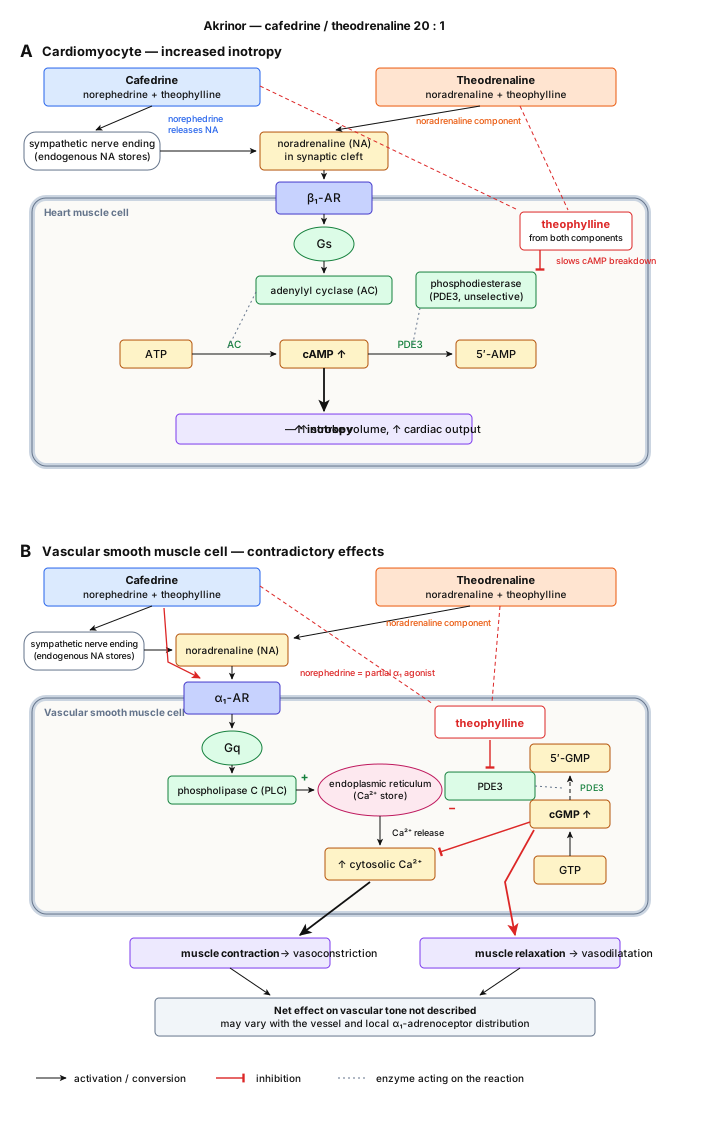
In vascular smooth muscle cells, two effects oppose alpha-1-mediated vasoconstriction:
- Norephedrine may act as a partial alpha-1 agonist: it mediates vasoconstriction by itself, but possibly reduces "the effects of endogenous noradrenaline and of the noradrenaline component of theodrenaline".
- Theophylline is a non-selective PDE inhibitor and indirectly reduces Ca2+ in the cytosol.
Figure adapted from Bein et al. (re-rendered with Claude Opus 5 as SVG for clarity), caption quoted in full:
"(A) Proposed mechanism of action of cafedrine/theodrenaline in cardiomyocytes: increased inotropy. Cafedrine/theodrenaline is a combination of norephedrine and theophylline (cafedrine) and noradrenaline and theophylline (theodrenaline). The norephedrine component releases noradrenaline from endogenous stores (nerve endings). The endogenously released noradrenaline and the noradrenaline component of theodrenaline activate the β1-adrenoceptor (β1-AR) in the heart muscle cell, which leads—via Gs-proteins—to activation of adenylyl cyclase (AC). Adenylyl cyclase catalyzes the conversion of ATP to cAMP which increases inotropy. The theophylline component of cafedrine and theodrenaline is expected to inhibit the phosphodiesterases (PDEs) in an unselective manner. PDE3 is the most relevant PDE in human cardiac tissue. Inhibition of PDE slows degradation of cAMP and increases cAMP concentration, thereby reinforcing the β1-adrenoceptor stimulation.
(B) Proposed mechanism of action of cafedrine/theodrenaline in vascular smooth muscle cells: contradictory effects. The noradrenaline component of theodrenaline activates the α1-adrenoceptor of the vascular smooth muscle cell. This leads—via Gq-proteins—to activation of phospholipase C (PLC) which ultimately leads to release of Ca2+ from the endoplasmic reticulum (ER) into the cytosol, thereby initiating muscle contraction. The norephedrine component of cafedrine stimulates the release of endogenous noradrenaline but may also act as a partial agonist at the α1-adrenoceptor, thereby mediating vasoconstriction by itself but possibly reducing the effects of endogenous noradrenaline and of the noradrenaline component of theodrenaline. The positive effect on muscle contraction may be counteracted further by a vasodilatory effect of theophylline, which is thought to inhibit PDE3 and therefore the degradation of cGMP to 5′-GMP. This would result in accumulation of cGMP. cGMP inhibits release of Ca2+ into the cytosol, leading to relaxation of the muscle, thus counteracting α1-mediated vasoconstriction. The net effect of α1-mediated vasoconstriction and cGMP-mediated vasodilatation on the vascular muscle cell has not been described yet and may vary depending on the specific vessel and local distribution of α1-adrenoceptors."